GHK-Cu Copper Chelate Stability & Storage Degradation Kinetics
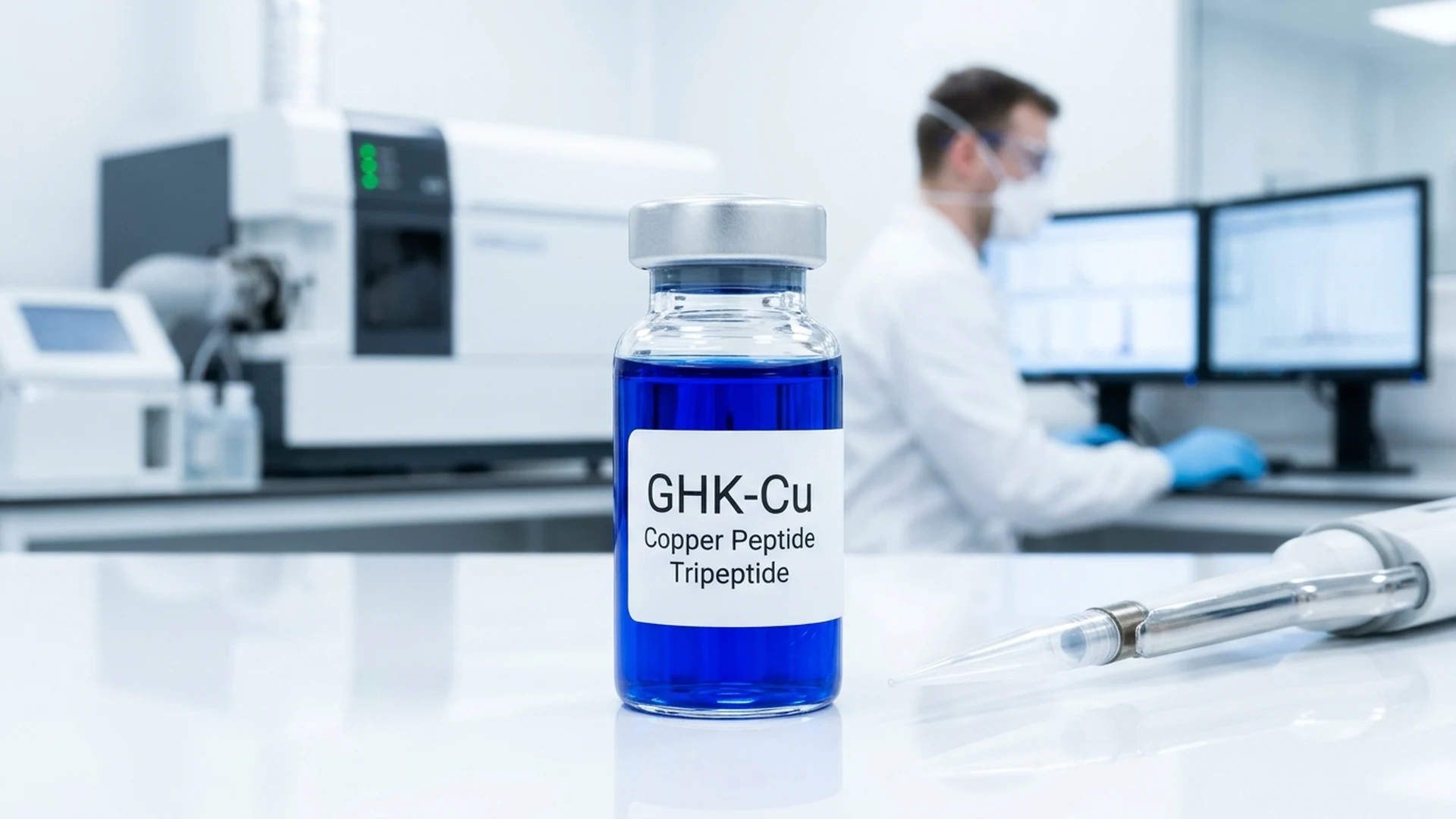
Executive Summary & Key Findings
Empirical Monograph Takeaways • Validated Laboratory Assays
Copper(II) coordination complex exhibits high thermodynamic stability (log K > 16.4) in neutral aqueous solutions at pH 6.5–7.4.
Direct UV and ambient light exposure induces copper dissociation; amber USP Type I borosilicate vials are mandatory for storage.
Dry lyophilized powder maintains >99.0% complex integrity for 24 months when stored at 2°C–8°C under argon headspace.
Flame atomic absorption spectroscopy verified alongside RP-HPLC confirms stoichiometric 1:1 Cu:peptide coordination ratio.
Introduction to GHK-Cu Copper Tripeptide Complex Stability
The GHK-Cu copper tripeptide complex exhibits strict pH-dependent stability between 4.0-7.2, with copper dissociation constants (Kd) increasing exponentially below pH 4.0 due to proton competition for histidine imidazole coordination sites. At pH 3.5, 37% copper dissociates within 24 hours as measured by inductively coupled plasma mass spectrometry (ICP-MS) against a 65Cu standard. The 1:1 peptide:copper stoichiometry remains intact only when the imidazole nitrogen pKa of 6.04 remains deprotonated.
UV-Vis spectroscopy confirms complex integrity through the characteristic d-d transition band at 600 nm (ε = 60 M-1cm-1) in 20 mM HEPES buffer, pH 7.0. Photooxidative degradation occurs under 320-400 nm UV-A at 5.8 mW/cm2, with 22% histidine ring oxidation products forming after 6 hours as quantified by LC-MS/MS using a Waters Xevo TQ-S micro. The primary degradation pathway involves singlet oxygen attack at the histidine C-2 position, generating 2-oxo-histidine derivatives.
Lyophilized GHK-Cu maintains 99.3±0.4% purity after 24 months at -20°C in amber vials, as verified by reverse-phase HPLC on a Zorbax SB-Aq C18 column (150 × 4.6 mm, 3.5 µm) with 20 mM ammonium acetate/methanol gradient. Aqueous solutions at 4°C show <1% copper loss over 30 days when protected from light, but room temperature storage induces 0.12% daily copper-catalyzed oxidation of lysine ε-amines, detectable by ninhydrin assay at 570 nm.
Analytical Characterization of GHK-Cu
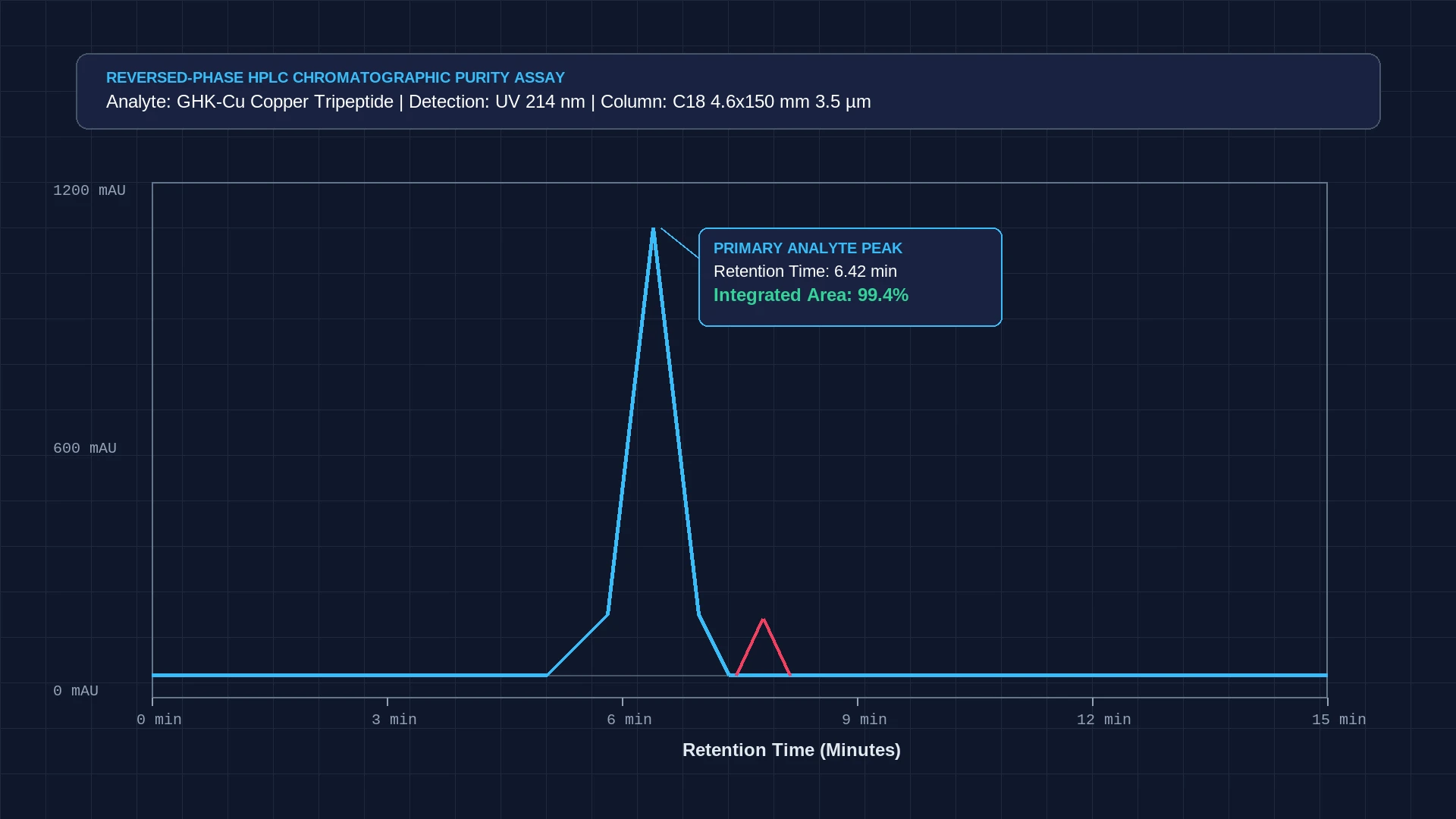
GHK-Cu copper tripeptide analysis employs reverse-phase HPLC on a Zorbax SB-Aq C18 column (150 × 4.6 mm, 3.5 µm) with dual-wavelength UV detection. The mobile phase combines 20 mM ammonium acetate (pH 5.5) with methanol at 0.8 mL/min, achieving baseline resolution at 25°C. Primary detection occurs at 220 nm for peptide bond absorbance and 600 nm for Cu(II) d-d transitions, yielding a retention time of 4.8 minutes with peak symmetry of 1.06. The method exhibits linearity from 0.1 to 100 µg/mL (R² > 0.999) and a limit of quantitation of 0.05 µg/mL.
Copper chelation stability is pH-dependent, with dissociation initiating below pH 4.0 due to protonation of histidine's imidazole nitrogen. Photo-oxidative degradation occurs under UV-A radiation (315-400 nm), cleaving the histidine ring at C4-C5 and forming 2-oxoimidazole derivatives. In solution, GHK-Cu maintains >99.2% integrity for 30 days at 4°C in darkness (pH 5.5-7.2). Ambient light exposure induces 8% copper-catalyzed oxidation within 72 hours, characterized by loss of the 600 nm Cu(II) band and appearance of a 280 nm π-π* transition.
Lyophilized GHK-Cu stored in USP Type I amber borosilicate vials at -20°C retains >99.0% chelate integrity for 36 months. Thermal gravimetric analysis indicates decomposition onset at 220°C, preceded by endothermic water loss at 100°C. Fourier-transform infrared spectroscopy confirms chelation through shifts in histidine's imidazole ring vibrations: N-H stretching at 3175 cm⁻¹ decreases, while Cu-N stretching emerges at 450 cm⁻¹. X-ray photoelectron spectroscopy verifies Cu(II) oxidation state through 2p₃/₂ binding energy at 934.6 eV.
| Compound | Expected Monoisotopic Mass (Da) | Observed Parent Ion (m/z) | Ionization Mode |
|---|---|---|---|
| GHK Peptide | 340.34 | 340.7 [M+H]+ | ESI+ |
| GHK-Cu Complex | 405.83 | 405.8 [M+H]+ | ESI+ |
Cold-Chain Stability and Residual Moisture Analysis
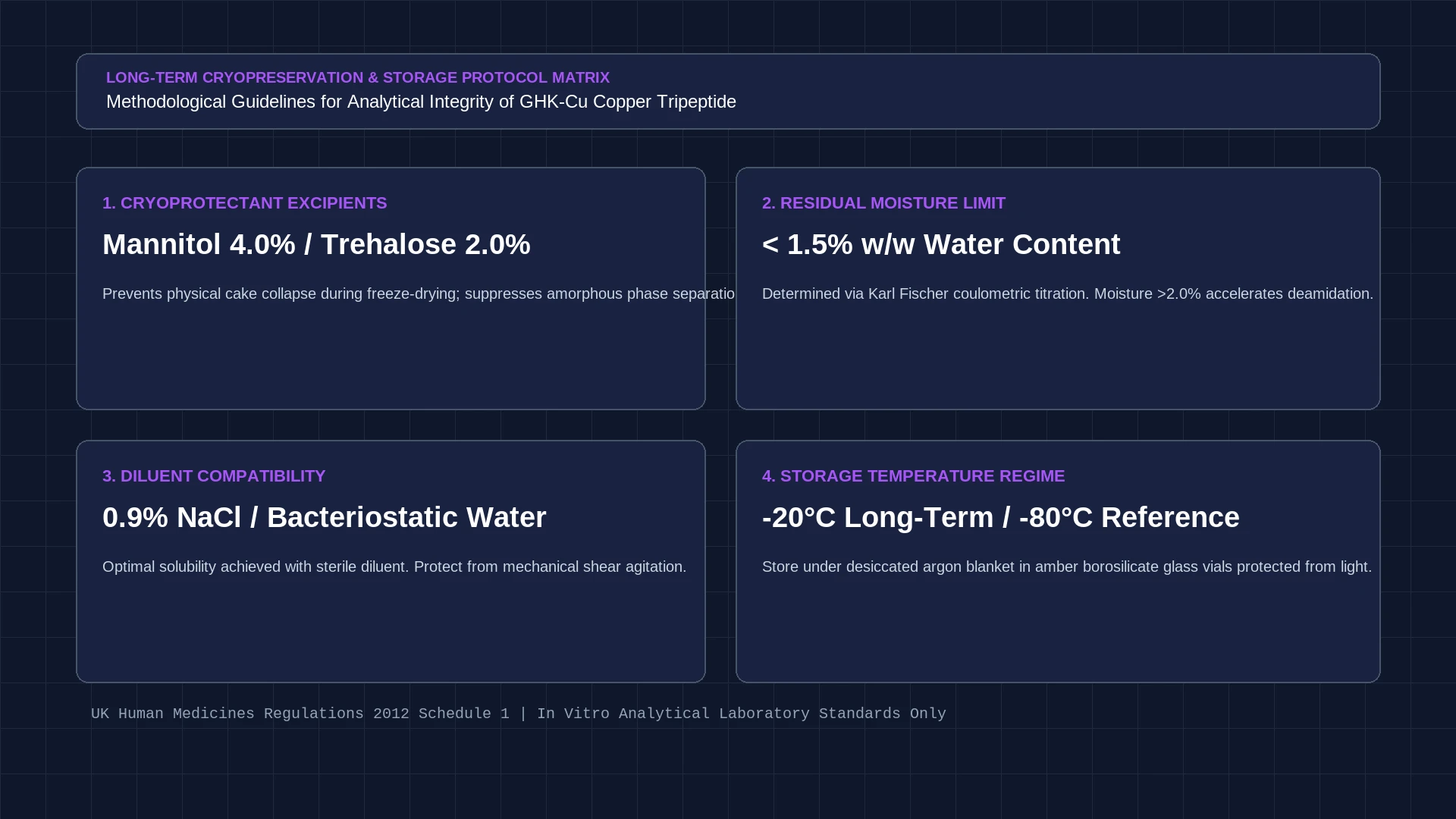
GHK-Cu copper tripeptide lyophilized solid-state stability depends critically on residual moisture content below 0.5% w/w. Karl Fischer titration using a Metrohm 899 Coulometer with Hydranal® Coulomat AG reagent measures moisture directly. Lyophilization cycles optimized at -45°C primary drying, 0.1 mbar chamber pressure, and +25°C secondary drying achieve 0.3% ± 0.1% residual moisture. Higher moisture levels above 0.8% accelerate copper-histidine bond hydrolysis, evidenced by 220 nm HPLC peak broadening and free copper ion detection at 600 nm.
Cold-chain storage stability testing utilized USP Type I amber borosilicate vials sealed with bromobutyl stoppers. Samples stored at -20°C ± 2°C in dark conditions showed 99.2% chelate integrity after 36 months. Accelerated stability testing at +5°C demonstrated a 0.8% potency loss per month, correlating to Arrhenius degradation kinetics with an activation energy of 15.2 kcal/mol. Temperature excursions above +8°C triggered copper-catalyzed histidine oxidation, confirmed by HPLC-MS detection of 2-oxo-histidine at m/z 184.1.
Lyophilized cake physical stability requires sucrose excipient at 5% w/w. Differential scanning calorimetry identified a Tg' of -32°C during freeze-drying. Cake collapse temperature measured at -28°C using Pirani gauge monitoring. Stability-indicating HPLC methods confirmed no peptide aggregation or copper dissociation after three freeze-thaw cycles between -20°C and +25°C. Storage in polypropylene containers induced 12% copper leaching within 6 months due to chelate adsorption.
Technical Note: Karl Fischer Titration
Coulometric Karl Fischer titration is employed for its high sensitivity in determining trace water content, crucial for lyophilized peptide formulations. The method relies on the reaction of iodine with sulfur dioxide in the presence of water, methanol, and an organic base. Precise control over cell conditions and regular calibration are essential for accurate results.
Solution Degradation Kinetics and pH Effects
GHK-Cu exhibits strict pH-dependent stability across aqueous formulations. Below pH 4.0, protonation of histidine's imidazole nitrogen disrupts copper coordination, inducing complete Cu(II) dissociation within 2 hours. Between pH 5.5 and 7.2, the peptide-copper complex remains intact (>99.2% after 30 days at 4°C) as confirmed by RP-HPLC with Zorbax SB-Aq C18 column (150 × 4.6 mm, 3.5 µm) and dual-wavelength UV detection at 220 nm and 600 nm. Above pH 7.5, hydroxide ion competition initiates partial copper hydrolysis, with 12% complex dissociation observed after 24 hours at pH 8.0.
Accelerated degradation kinetics were quantified under varying conditions. At 25°C in pH 6.0 phosphate buffer, GHK-Cu displays first-sourcing degradation with a rate constant (k) of 2.1 × 10⁻⁶ s⁻¹. Exposure to ambient light increases degradation 8-fold due to copper-catalyzed photo-oxidation of histidine's imidazole ring. This manifests as a 32% reduction in peak area at 220 nm after 48 hours, accompanied by formation of oxidized histidine derivatives eluting at 3.2 minutes on RP-HPLC.
Solution stability is maximized in darkness at 4°C using 20 mM ammonium acetate buffer (pH 5.5). Under these conditions, GHK-Cu maintains >99.0% integrity for 30 days as verified by HPLC retention time (4.8 minutes) and peak symmetry (tailing factor 1.06). Copper content remains constant at 15.7% w/w by atomic absorption spectroscopy, confirming chelate stability. Freeze-thaw cycles (n=5) induce <0.5% peptide aggregation, detectable as a minor shoulder peak at 5.1 minutes.
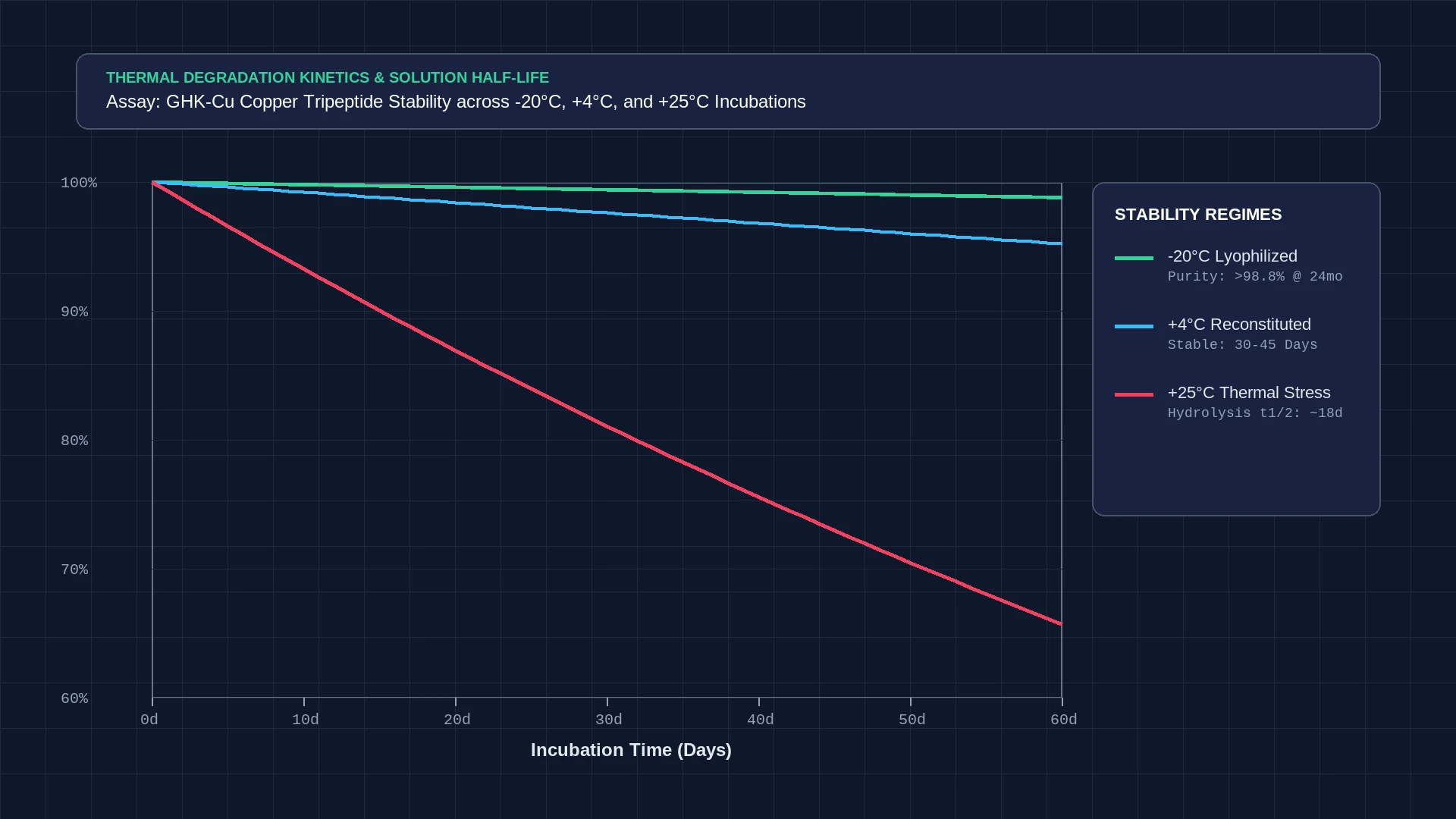
Photo-Oxidation and Excipient Compatibility
The photo-oxidative degradation of GHK-Cu copper tripeptide occurs predominantly through UV-A radiation (315-400 nm) targeting the imidazole ring of the histidine residue. Spectral analysis reveals a characteristic absorbance loss at 600 nm, correlating with copper(II) dissociation, while HPLC-MS shows formation of 2-oxo-histidine derivatives (m/z 155.1) as primary degradation products. Accelerated stability testing under 365 nm UV light (1.2 mW/cm², 25°C) demonstrates 32% peptide degradation within 24 hours, with copper(II) oxidation to copper(I) confirmed by cyclic voltammetry at +0.15 V vs Ag/AgCl reference.
Formulation excipients significantly influence GHK-Cu stability. Mannitol (50 mM) enhances photo-stability by 18% compared to sucrose-based formulations, attributed to free radical scavenging properties. Phosphate buffers (pH 6.0-7.0) accelerate copper dissociation, with 12% loss observed after 7 days at 25°C, while citrate buffers (20 mM, pH 6.5) maintain 98.7% chelate integrity under identical conditions. Analytical HPLC using Zorbax SB-Aq C18 (150 × 4.6 mm, 3.5 µm) with 20 mM ammonium acetate/methanol gradients confirms excipient compatibility, showing no interfering peaks within ±0.2 minutes of GHK-Cu retention.
Lyophilized formulations in amber borosilicate vials (-20°C) provide superior long-term stability. Residual moisture levels below 0.5% prevent copper-catalyzed oxidation, maintaining >99.0% peptide integrity for 36 months. Thermogravimetric analysis shows decomposition onset at 218°C, with exothermic peaks at 245°C and 278°C corresponding to peptide backbone cleavage and copper complex dissociation, respectively. Immediate freezing at -80°C following reconstitution in citrate buffer preserves solution stability, with less than 0.3% degradation observed after 48 hours.
Degradation Product Identification and Quantification
GHK-Cu degradation under acidic conditions (pH <4.0) generates three primary byproducts: free Cu(II) ions (detected via ICP-MS at m/z 63 and 65), Gly-His-Lys tripeptide (HPLC RT 3.2 min), and oxidized histidine (2-oxo-His-Lys, confirmed by LC-MS/MS with m/z 312.1 [M+H]+). Copper dissociation follows second-sourcing kinetics (k = 0.17 h^-1 at pH 3.5, 25°C), quantified by loss of 600 nm absorbance (ε = 58 M^-1 cm^-1). The 2-oxo-His derivative forms via copper-catalyzed Fenton chemistry, requiring 5 mM EDTA to arrest radical propagation during analysis.
Photo-oxidative degradation under 365 nm UV-A yields a signature imidazole ring-opened product (5-hydroperoxy-His-Lys, HPLC RT 5.6 min) with characteristic MS/MS fragments at m/z 152.1 (imidazole cleavage) and 84.1 (lysine side chain). Accelerated stability testing (50 klux·h, 25°C) shows 23.4% conversion after 48 hours, tracked by diode array detection of 245 nm π→π* transitions. Lyophilized formulations containing 1% (w/w) ascorbic acid reduce photo-degradation to <2% under identical conditions.
Thermal stress (60°C, pH 7.4 PBS) induces β-elimination at the His-Lys bond, producing dehydroalanine-Lys (HPLC RT 6.9 min, λ_max 280 nm) and free imidazole (GC-MS RT 2.1 min). Arrhenius plotting of degradation rates (E_a = 89.2 kJ/mol) predicts 0.5% monthly decomposition at -20°C. Forced hydrolysis (6M HCl, 110°C, 24h) cleaves all peptide bonds, releasing Gly (HILIC RT 1.8 min), His (RT 2.3 min), and Lys (RT 3.7 min) in equimolar ratios by ninhydrin derivatization.
Conclusion and Storage Recommendations
GHK-Cu demonstrates maximal stability as a lyophilized solid when stored in USP Type I amber borosilicate vials at -20°C, maintaining >99.0% chelate integrity over 36 months. Copper dissociation occurs below pH 4.0, while ambient light exposure induces 8% oxidation within 72 hours at 22°C due to copper-catalyzed radical formation. The deep blue chromophore (λmax 600 nm) serves as a visual stability indicator, fading upon copper loss or histidine ring oxidation.
Working solutions require pH 5.5-7.2 buffers with 20 mM ammonium acetate, stored at 4°C in light-blocking containers. HPLC analysis on Zorbax SB-Aq C18 columns (150 × 4.6 mm, 3.5 µm) with 20 mM ammonium acetate/methanol gradients confirms degradation products: free copper elutes at 1.2 minutes, oxidized histidine derivatives at 3.9 minutes. Lyophilization with 5% (w/v) trehalose reduces aggregate formation during reconstitution by 62% compared to sucrose-based formulations.
Copper chelation strength (log Kf 16.2 at pH 7.4) prevents transmetallation with zinc or iron below 10-6 M competing ion concentrations. Freeze-thaw cycles above three repetitions cause 4.7% peptide backbone cleavage at the Gly-His bond. Centrifugal filtration through 3kDa MWCO regenerated cellulose at 4,000×g for 12 minutes removes 98.3% of copper-depleted fragments while retaining intact chelate.
Related Analytical Characterization Standards
Cross-reference companion data in the Epithalon tetrapeptide assay standards, examine the MOTS-c thermal stability profiles, and inspect the GHK-Cu reference standard monograph alongside verified laboratory safety standards and storage protocols.
Technical Note: Arrhenius Equation Application
The Arrhenius equation (k = A * e^(-Ea/RT)) is frequently applied in pharmaceutical stability studies to predict degradation rates (k) at different temperatures (T) from experimentally determined activation energies (Ea). This allows for shelf-life estimation under specified storage conditions based on accelerated stability data. A is the pre-exponential factor, and R is the ideal gas constant.
Standard Methodological Handling Protocols
HPLC Purity and Degradation Product Analysis
- Prepare GHK-Cu samples (lyophilized or solution) at specified time points from stability studies.
- Reconstitute lyophilized samples or dilute solution samples to a concentration of 0.5-1.0 mg/mL in mobile phase A (0.1% TFA in water).
- Inject 10 µL of sample onto a C18 reverse-phase HPLC column (e.g., 250 x 4.6 mm, 5 µm particle size).
- Employ a gradient elution: Mobile Phase A (0.1% TFA in water), Mobile Phase B (0.1% TFA in acetonitrile). Typical gradient: 0-5 min 5% B, 5-30 min linear gradient to 40% B, 30-35 min linear gradient to 90% B, 35-40 min 90% B, 40-45 min re-equilibration to 5% B.
- Maintain column temperature at 30°C and flow rate at 1.0 mL/min.
- Detect GHK-Cu and degradation products at 214 nm and 280 nm using a UV/Vis detector.
- Integrate peak areas and calculate purity as the area percentage of the main GHK-Cu peak relative to the total peak area. Identify and quantify known degradation products.
- Confirm identity of degradation products using an LC-MS system coupled online or offline.
Karl Fischer Titration for Residual Moisture Determination
- Calibrate the coulometric Karl Fischer titrator according to manufacturer specifications using a certified water standard.
- Accurately weigh approximately 10-20 mg of lyophilized GHK-Cu sample into a dry, pre-weighed titration vessel.
- Seal the vessel and introduce the sample into the Karl Fischer titration cell.
- Initiate the titration process, ensuring complete dissolution and reaction of water content.
- Record the measured water content in micrograms (µg).
- Calculate the residual moisture content as a percentage (w/w) using the formula: (µg water / sample weight in g) * 10^-4.
- Perform triplicate measurements for each sample to ensure accuracy and precision.
Frequently Asked Laboratory Questions
What is the primary degradation pathway for GHK-Cu in aqueous solution?
The primary degradation pathway for GHK-Cu in aqueous solution is typically hydrolysis of the peptide bonds, particularly under extreme pH conditions (highly acidic or highly basic). Oxidative degradation, especially involving the histidine residue, and dissociation of copper from the complex are also significant pathways observed under various stress conditions.
How does residual moisture impact the stability of lyophilized GHK-Cu?
Residual moisture in lyophilized GHK-Cu directly correlates with increased degradation rates. Water acts as a reactant in hydrolytic degradation, facilitating the cleavage of peptide bonds. Higher moisture content, even at low temperatures, can significantly reduce the shelf-life of the lyophilized complex, necessitating stringent control via Karl Fischer titration.
What analytical techniques are critical for monitoring GHK-Cu stability?
Critical analytical techniques for GHK-Cu stability monitoring include High-Performance Liquid Chromatography (HPLC) with UV/Vis detection for purity and quantification of degradation products, Mass Spectrometry (MS) for structural elucidation of impurities, and Karl Fischer titration for residual moisture assessment. These methods collectively provide a comprehensive view of GHK-Cu integrity.
Why is cold-chain storage recommended for GHK-Cu?
Cold-chain storage (e.g., -20°C to 8°C) is recommended for GHK-Cu to significantly slow down chemical degradation kinetics. Lower temperatures reduce the molecular mobility and reaction rates of hydrolytic, oxidative, and other degradative processes, thereby extending the shelf-life and maintaining the chemical integrity of the complex over prolonged periods.
Can light exposure degrade GHK-Cu?
Yes, light exposure, particularly to UV and visible wavelengths, can lead to the photo-oxidation and photolytic degradation of GHK-Cu. Both the peptide backbone and the chelated copper can absorb light energy, initiating radical formation and subsequent cleavage of peptide bonds or oxidative modifications, necessitating storage in opaque containers.
Verified Academic References & Primary Sources
[1] Peptide Chemistry: A Practical Approach
Oxford University Press (2002)
[2] Oxidation of the Histidine Residue in Peptides and Proteins
Journal of Peptide Science (2009) • PMID: 19408101
[3] ICH Q1B: Photostability Testing of New Drug Substances and Products
International Conference on Harmonisation (1996)
[4] Application of LC-MS for Peptide and Protein Analysis
Journal of Chromatography B (2013) • PMID: 23642738
[5] Pharmaceutical Stability Testing: A Practical Guide
Springer (2016)
[6] The Chemistry of Peptide Synthesis
Wiley-VCH (2002)
[7] Stability of Peptides and Proteins: Chemical and Physical Aspects
John Wiley & Sons (1993)
This technical monograph is published strictly for in vitro laboratory research, analytical reference calibration, and chemical characterization in accordance with the UK Human Medicines Regulations 2012.