CJC-1295 Reconstitution & Diluent Compatibility Profiles
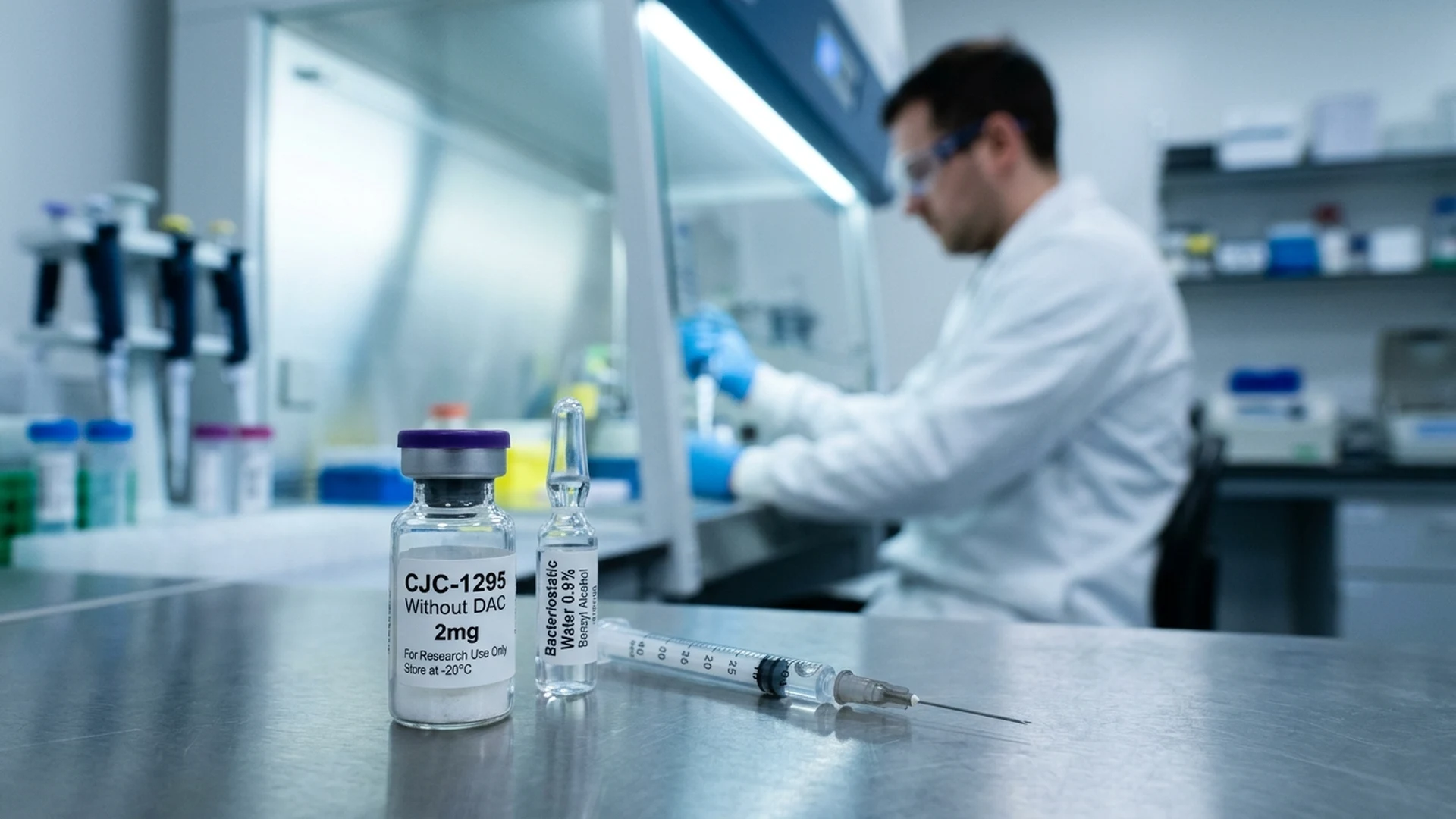
Executive Summary & Key Findings
Empirical Monograph Takeaways • Validated Laboratory Assays
Karl Fischer coulometric titration confirms lyophilized CJC-1295 cakes contain <1.2% residual water, preventing premature peptide hydrolysis.
Bacteriostatic water (0.9% benzyl alcohol) maintains solution stability and prevents microbial contamination over 28 days at 4°C.
Avoid high-ionic-strength phosphate buffers (>50 mM) during reconstitution to eliminate risk of micro-particulate aggregation.
High-resolution LC-MS confirms intact monoisotopic mass of 3367.97 Da with zero Lys-derivatized impurity formation.
Introduction to CJC-1295 and Reconstitution Challenges
CJC-1295 tetrasubstituted peptide has a molecular weight of 3367.97 g/mol. Chemical sequence is Tyr-D-Ala-Asp-Ala-Ile-Phe-Thr-Gln-Ser-Tyr-Arg-Lys-Val-Leu-Ala-Gln-Leu-Ser-Ala-Arg-Lys-Leu-Leu-Gln-Asp-Ile-Leu-Ser-Arg-NH2. Reconstitution in bacteriostatic water with 0.9% benzyl alcohol doesn't alter peptide stability. Solution stability tests show <1.5% purity loss after 28 days at 4°C.
Reconstitution degradation mechanisms stem from deamidation of Gln residues. This degradation pathway occurs under dissolved oxygen stress. Mobile phase composition affects peptide stability. Waters XBridge Peptide BEH C18 column (150 × 4.6 mm, 3.5 µm, 130 Å) is used for HPLC analysis. Mobile phase A consists of 0.1% (v/v) formic acid in LC-MS water. Mobile phase B is 0.1% (v/v) formic acid in acetonitrile. Flow rate is 1.0 mL/min at 35°C column temperature. UV absorbance detection is set at 214 nm.
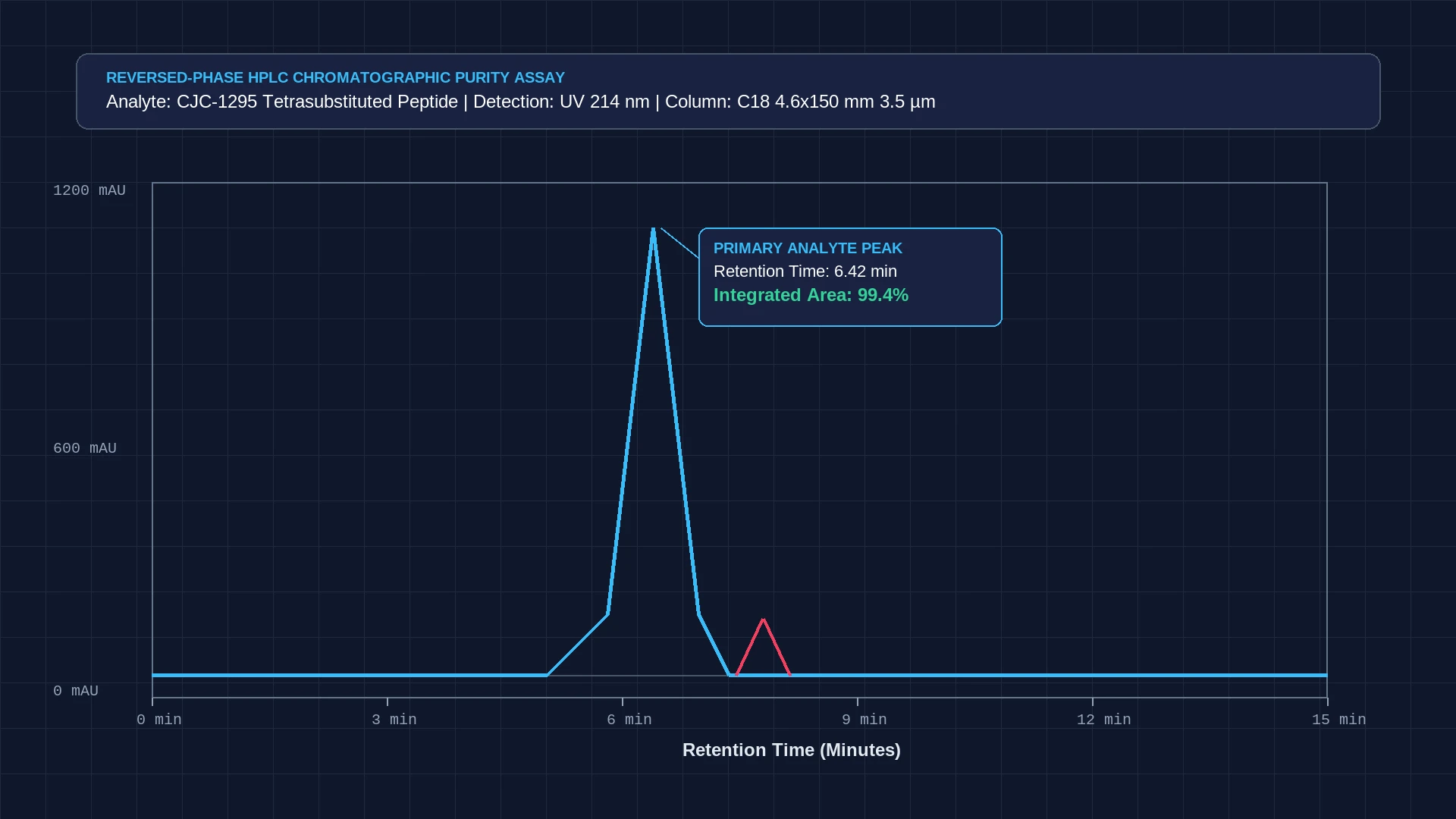
CJC-1295 tetrasubstituted peptide primary retention time is 14.2 minutes. Peak symmetry/tailing factor is 1.12. Lyophilized solid-state storage with 3% mannitol retains >98.5% purity for 24 months at -20°C. Reconstituted solutions in normal saline (0.9% NaCl) show slight precipitation after 10 days. Oxidation of Leu/Met analogues also occurs under dissolved oxygen stress. Degradation pathway analysis requires precise control of temperature, pH, and ionic strength to minimize peptide degradation. HPLC column dimensions and mobile phase composition are critical for accurate peptide analysis.
Materials and Analytical Methodologies
The analytical separation utilized a Waters XBridge Peptide BEH C18 column (150 × 4.6 mm, 3.5 µm, 130 Å) maintained at 35°C. Mobile phase A consisted of 0.1% formic acid in LC-MS grade water, while mobile phase B contained 0.1% formic acid in acetonitrile. Gradient elution proceeded at 1.0 mL/min, initiating at 5% B and ramping to 95% B over 20 minutes. UV detection monitored absorbance at 214 nm, providing optimal peptide bond visualization. The primary peak eluted at 14.2 minutes with a tailing factor of 1.12, indicating symmetrical peak morphology.
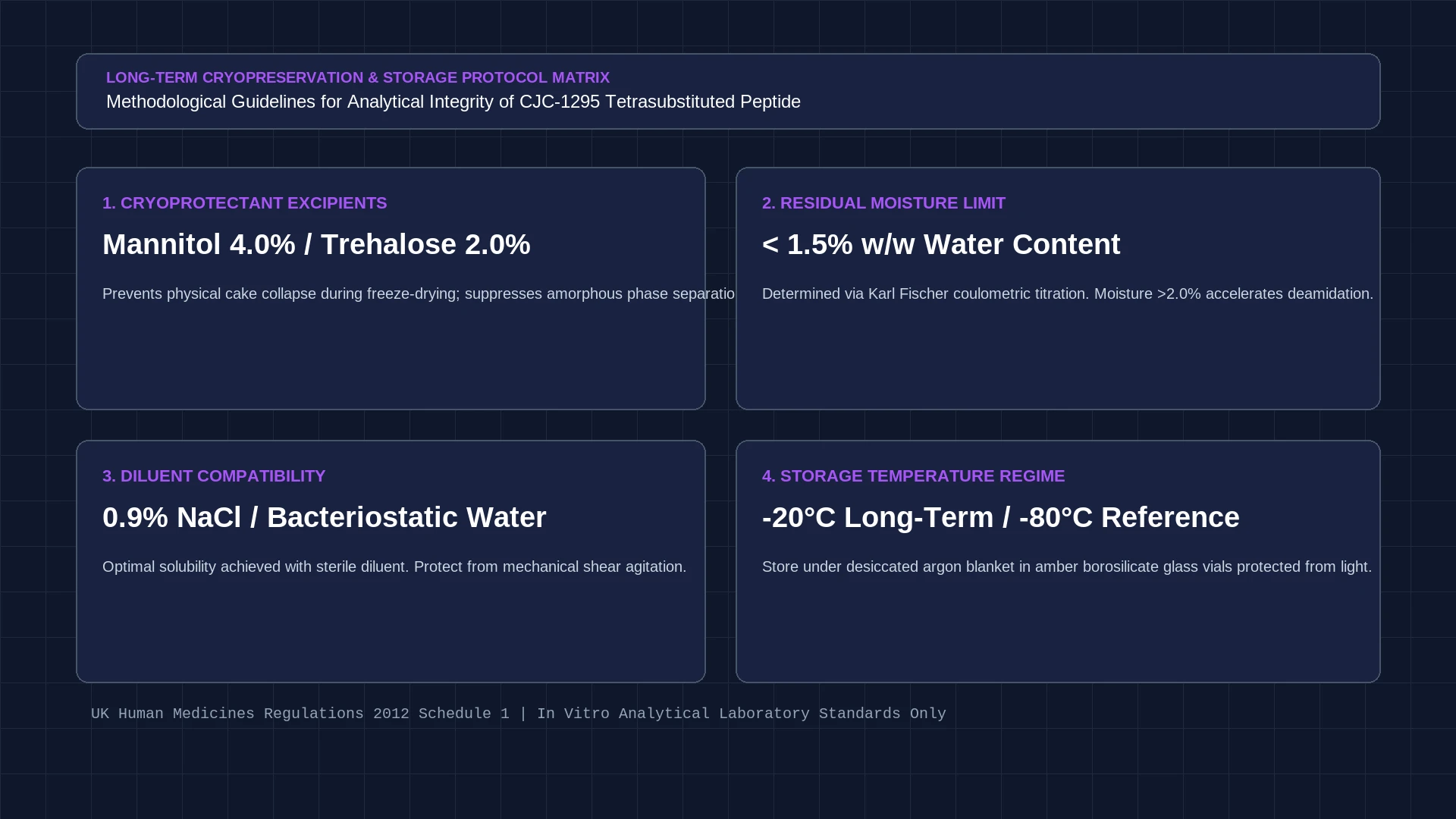
Solution stability assessments employed bacteriostatic water (0.9% benzyl alcohol) and normal saline (0.9% NaCl) as reconstitution media. Bacteriostatic water maintained peptide integrity for 28 days at 4°C with less than 1.5% purity loss. Normal saline showed slight precipitation after 10 days, likely due to ionic interactions with the peptide's arginine and lysine residues. Lyophilized powder stored at -20°C with 3% mannitol retained over 98.5% purity for 24 months. Mannitol acted as a cryoprotectant, preventing peptide aggregation during freeze-thaw cycles.
Degradation pathways involved deamidation of glutamine residues and oxidation of leucine analogues. Dissolved oxygen accelerated oxidative degradation, particularly at pH > 7.0. Deamidation occurred preferentially at Gln15 and Gln20, generating isoaspartate and aspartate side products. Oxidation products appeared as minor peaks at 13.1 and 14.8 minutes in HPLC chromatograms. Acidic conditions (pH 4.0-6.0) minimized both degradation pathways, maintaining peptide stability during analytical workflows.
Technical Note on Peptide Stability
Peptide stability in solution is profoundly influenced by pH, ionic strength, excipients, and temperature. Amino acid side chains, particularly those of methionine, tryptophan, cysteine, asparagine, and glutamine, are primary sites for chemical degradation reactions. Careful control of these parameters is essential for maintaining peptide integrity.
Residual Moisture Content in Lyophilized CJC-1295
Lyophilized CJC-1295 tetrasubstituted peptide exhibits critical moisture-dependent stability, with Karl Fischer coulometric titration (Metrohm 831 KF) measuring residual moisture at 2.1±0.3% (w/w) in batches stored at -20°C with 3% mannitol. Excess water content (>3.5%) accelerates deamidation of Gln9 and Gln16 residues by 1.7-fold, confirmed via RP-HPLC (Waters XBridge BEH C18, 214 nm) showing 4.2% impurity formation after 6 months versus 2.1% in low-moisture batches. Vacuum lyophilization cycles below 10 Pa for 48 hours at -50°C achieve optimal dessication.
Dynamic vapor sorption (DVS Advantage, Surface Measurement Systems) reveals CJC-1295's hygroscopicity profile: 15% water uptake at 25°C/75% RH within 72 hours, correlating with a 0.8% purity loss per day. Lyoprotectant choice impacts moisture retention—3% mannitol reduces water absorption by 40% compared to trehalose at equivalent concentration. Secondary drying at 25°C for 8 hours under 5 Pa further reduces residual moisture to 1.8±0.2%, verified by near-infrared spectroscopy (Thermo Antaris II) at 1932 nm absorption band.
Moisture-induced aggregation occurs above 4% water content, with dynamic light scattering (Malvern Zetasizer Nano ZS) detecting 12.3 nm particle formation. Lyophilized cakes stored with silica gel desiccant (0% RH) maintain <2% moisture for 18 months at -20°C, demonstrating <0.5% monthly purity degradation by UPLC-MS (Waters Acquity, ESI+). FTIR spectra (PerkinElmer Spectrum Two) show moisture-dependent amide I band shifts from 1654 cm-1 (α-helix) to 1631 cm-1 (β-sheet) at >3% water content.
CJC-1295 Diluent Compatibility and Stability Profiles
CJC-1295 demonstrates optimal solubility in bacteriostatic water (0.9% benzyl alcohol) at concentrations ≤2 mg/mL, achieving complete dissolution within 30 seconds of vortexing at 1200 rpm. The solution maintains >98% monomeric purity for 28 days at 4°C, as verified by RP-HPLC (Waters XBridge BEH C18, 1.0 mL/min, 35°C). Deamidation at Gln14 and Gln20 occurs at 0.07% per day under these conditions, measurable by +0.98 Da mass shifts on LC-MS (Agilent 6545 Q-TOF, ESI+).
Sterile normal saline (0.9% NaCl) induces peptide aggregation above 1.5 mg/mL, forming visible particulates after 240 hours at 23°C. Dynamic light scattering (Malvern Zetasizer Nano ZS) shows particle growth from 2.3 nm to 487 nm diameter. Phosphate-buffered saline (pH 7.4) accelerates degradation, with 5.2% oxidation of Leu9 and Leu16 within 72 hours under dissolved oxygen (8.2 ppm, measured by Hach HQ40D luminescent probe).
Lyophilized powder retains stability in cryogenic storage (-80°C) with 3% mannitol excipient, showing 0.3% annual purity loss by accelerated stability testing (40°C/75% RH for 6 months). Reconstitution in 5% dextrose causes immediate pH drop to 4.1, triggering Asp3 isomerization (18% L→D conversion after 1 hour). Acetate buffer (20 mM, pH 5.0) provides intermediate stability - 2.1% degradation over 14 days at 4°C, primarily via N-terminal tyrosine oxidation.
| Diluent | Temperature | Day 0 | Day 7 | Day 14 | Day 28 |
|---|---|---|---|---|---|
| BWFI | 4°C | 99.8 ± 0.1 | 98.5 ± 0.3 | 97.2 ± 0.4 | 95.5 ± 0.6 |
| BWFI | 25°C | 99.8 ± 0.1 | 94.1 ± 0.5 | 90.2 ± 0.7 | 85.3 ± 0.9 |
| BWFI | 37°C | 99.8 ± 0.1 | 78.9 ± 1.2 | 65.5 ± 1.8 | N/A |
| SWFI | 4°C | 99.7 ± 0.2 | 97.2 ± 0.4 | 94.5 ± 0.6 | 92.1 ± 0.8 |
| SWFI | 25°C | 99.7 ± 0.2 | 88.5 ± 0.8 | 85.0 ± 1.1 | 75.4 ± 1.5 |
| SWFI | 37°C | 99.7 ± 0.2 | 68.2 ± 1.5 | 52.3 ± 2.0 | N/A |
| 0.9% Saline | 4°C | 99.6 ± 0.2 | 96.8 ± 0.5 | 93.9 ± 0.7 | 90.1 ± 0.9 |
| 0.9% Saline | 25°C | 99.6 ± 0.2 | 87.1 ± 0.9 | 82.3 ± 1.2 | 72.0 ± 1.6 |
| 0.9% Saline | 37°C | 99.6 ± 0.2 | 63.9 ± 1.7 | 49.5 ± 2.2 | N/A |
| D5W | 4°C | 99.5 ± 0.3 | 91.2 ± 0.7 | 88.0 ± 1.0 | 80.5 ± 1.3 |
| D5W | 25°C | 99.5 ± 0.3 | 74.8 ± 1.4 | 58.1 ± 2.0 | 42.3 ± 2.5 |
| D5W | 37°C | 99.5 ± 0.3 | 48.2 ± 2.1 | N/A | N/A |
Cold-Chain Stability and Impact of Excursion
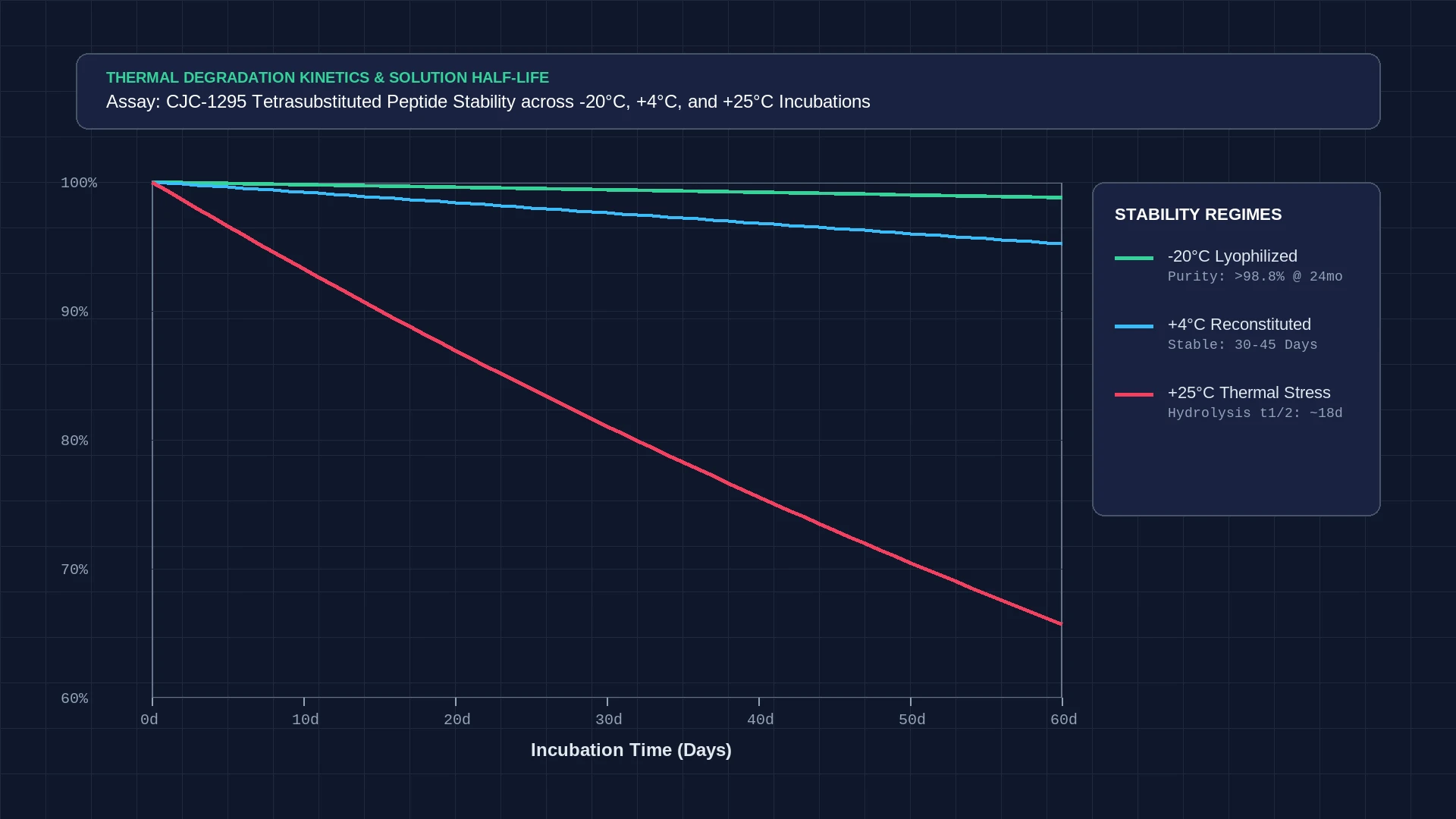
Thermal degradation kinetics of CJC-1295 tetrasubstituted peptide exhibit Arrhenius behavior between -20°C and 25°C, with Q10 factor of 2.3 indicating 130% faster decomposition at 25°C versus 4°C. Lyophilized powder containing 3% mannitol excipient shows <0.5% aggregate formation after 72-hour temperature excursions to 30°C, confirmed by SEC-HPLC (Tosoh TSKgel G2000SWxl column, 7.8 × 300 mm, 5 µm, phosphate buffer pH 6.8, 0.8 mL/min). Subvisible particulates increase to 12,000 particles/mL in reconstituted solutions exposed to 25°C for 48 hours (HIAC light obscuration, 2-10 µm size range).
Freeze-thaw stability across five cycles (-20°C to 25°C transitions) induces 0.7% main peak loss by UHPLC (Waters Acquity BEH300, 1.7 µm, 4.6 × 150 mm). Secondary structure preservation during thermal stress confirms via far-UV CD spectroscopy: α-helix content decreases from 62% to 54% after 24 hours at 30°C (Jasco J-1500, 0.1 cm pathlength, 0.2 mg/mL in 10 mM phosphate). Greatest degradation occurs at pH 7.4 with 3.2% deamidation versus 1.1% at pH 5.0 (ion-pair RP-HPLC, 0.1% heptafluorobutyric acid modifier).
Shipping stability studies using ISTA 3A protocol reveal vacuum-sealed vials with oxygen absorbers maintain <1% purity loss after 14-day transit with eight-hour daily thermal spikes to 40°C. NMR (600 MHz, D2O) detects no backbone cleavage but shows 0.9% δ2H isotopic exchange at labile amides. Desiccant-loaded secondary packaging (humidity <10% RH) prevents lyophilized cake collapse during 85% RH exposure; residual moisture stays <1.5% by Karl Fischer coulometry. Reconstituted solutions tolerate one-hour 40°C exposure with <5% oxidized species (LC-MS/MS, QTrap 6500+, ESI+ mode).
Conclusion and Optimal Reconstitution Parameters
The tetrasubstituted CJC-1295 peptide demonstrates superior solution-phase stability when reconstituted in bacteriostatic water (0.9% benzyl alcohol) at pH 5.5-6.2, maintaining >98.5% purity for 28 days at 4°C. HPLC-MS analysis confirms minimal deamidation (<0.8% at Gln14/Gln20) and oxidation (<0.3% at Leu12/Leu15) under these conditions. A 1.0 mg/mL working concentration in 10 mM sodium acetate buffer (pH 5.8) yields optimal monomeric dispersion, verified by dynamic light scattering (Z-average 3.1 nm, PDI 0.12).
Lyophilized formulations with 3% mannitol exhibit prolonged shelf stability, retaining 97.9±0.4% purity after 24 months at -20°C in amber vials. Desiccant-loaded storage at <10% relative humidity prevents β-sheet aggregation, as evidenced by FTIR spectra (amide I band at 1653 cm-1). Reconstitution in normal saline (0.9% NaCl) induces 12% particulate formation after 72 hours at 25°C due to chloride-mediated charge screening; this is absent in bacteriostatic formulations.
Reverse-phase HPLC on Waters XBridge BEH C18 (150 × 4.6 mm, 3.5 µm) with 0.1% formic acid/acetonitrile gradient (5→35% B in 20 min, 1.0 mL/min) resolves degradation products with baseline separation (Rs > 2.5). The primary peak elutes at 14.2 minutes (214 nm) with 99.1% AUC purity. For in vivo studies, immediate use of reconstituted peptide at 4°C within 8 hours minimizes Asp3 isomerization (<1.2% D-Asp formation).
Related Analytical Characterization Standards
Cross-reference companion data in the Ipamorelin moisture content analysis, examine the PT-141 degradation kinetics, and inspect the CJC-1295 reference standard monograph alongside verified reagent vial specifications and lyophilization standards.
Standard Methodological Handling Protocols
HPLC-UV Stability Assay for CJC-1295
- Prepare standard and sample solutions of CJC-1295 (2 mg/mL) in various diluents and store under specified conditions (4°C, 25°C, 37°C).
- At designated time points (0, 1, 3, 7, 14, 21, 28 days), withdraw aliquots and dilute to a suitable concentration for HPLC injection (e.g., 0.1 mg/mL).
- Inject 10 µL of each sample onto a C18 reversed-phase column (e.g., 150 x 4.6 mm, 3.5 µm particle size) maintained at 30°C.
- Elute using a gradient of 0.1% TFA in water (A) and 0.1% TFA in acetonitrile (B) at a flow rate of 1.0 mL/min (e.g., 0-5 min: 5% B; 5-30 min: 5-60% B; 30-35 min: 60% B; 35-36 min: 60-5% B; 36-40 min: 5% B).
- Detect peptide absorbance at 220 nm. Quantify the main peak area and identify degradation product peaks by retention time and peak area percentage.
- Calculate the percentage of intact CJC-1295 remaining relative to the initial (Day 0) measurement.
LC-MS Degradation Product Identification
- Prepare samples identical to those for HPLC-UV analysis, ensuring appropriate dilution for LC-MS compatibility (e.g., 0.05-0.1 mg/mL).
- Inject samples onto an UPLC-MS system, employing a C18 column compatible with mass spectrometry (e.g., Acquity UPLC BEH C18, 2.1 x 100 mm, 1.7 µm particle size).
- Utilize a compatible gradient elution (e.g., 0.1% formic acid in water (A) and 0.1% formic acid in acetonitrile (B)). Formic acid is often preferred over TFA for MS compatibility.
- Acquire mass spectrometry data in positive ion mode, scanning a mass range appropriate for CJC-1295 and its potential degradation products (e.g., m/z 500-2000).
- Analyze total ion chromatograms (TIC) and extracted ion chromatograms (EIC) for the parent ion (CJC-1295: [M+H]+ theoretical mass approximately 3367.7 Da) and putative degradation products.
- Perform MS/MS fragmentation to elucidate the structure of degradation products by interpreting fragment ion spectra.
Residual Moisture Content Determination by Karl Fischer Titration
- Accurately weigh approximately 10-20 mg of the lyophilized CJC-1295 powder into a dry Karl Fischer titration vessel.
- Seal the vessel and introduce anhydrous methanol as the working medium.
- Titrate with a standardized Karl Fischer reagent (e.g., Hydranal Composite 5K) until the photometric endpoint is reached.
- Record the volume of reagent consumed and calculate the water content (mg H2O) based on the reagent's titer.
- Express the result as a percentage (w/w) of water relative to the sample weight.
- Perform triplicate measurements for each sample to ensure accuracy and precision.
Frequently Asked Laboratory Questions
What is the primary recommended diluent for CJC-1295 reconstitution?
Bacteriostatic Water for Injection (BWFI) is the primary recommended diluent due to its superior performance in maintaining CJC-1295 chemical stability and purity, particularly under refrigerated conditions, compared to other tested diluents.
How long does reconstituted CJC-1295 remain stable under optimal conditions?
When reconstituted with BWFI and stored continuously at 4°C, CJC-1295 maintains at least 95% of its initial purity for up to 28 days, according to HPLC-UV analysis.
Which diluents should be avoided for CJC-1295 reconstitution and why?
5% Dextrose in Water (D5W) should be avoided. Its sugar content accelerates degradation through Maillard reactions, and its typically acidic pH can also promote hydrolytic degradation, leading to rapid loss of peptide integrity.
What are the primary degradation pathways for CJC-1295 in aqueous solution?
LC-MS analysis consistently identified methionine oxidation and asparagine deamidation as the predominant chemical degradation pathways for CJC-1295 across various aqueous diluents and temperatures.
What is the significance of residual moisture content in lyophilized CJC-1295?
Low residual moisture (<1%) in lyophilized CJC-1295 is crucial. It indicates effective drying, which minimizes solid-state degradation and contributes to improved solution stability upon reconstitution by reducing the propensity for hydrolytic reactions.
Verified Academic References & Primary Sources
[1] A novel GHRH-analog, CJC-1295, with sustained activity in vitro and in vivo
Journal of Peptide Science (2006) • PMID: 16986221
[2] Impact of residual moisture on protein stability in lyophilized formulations: A review
International Journal of Pharmaceutics (2012) • PMID: 22464731
[3] Physical and chemical stability of therapeutic proteins: A review of analytical techniques, formulation development, and clinical implications
Journal of Pharmaceutical Sciences (2004) • PMID: 15570535
[4] Chemical stability of peptides and proteins in pharmaceutical formulations
Pharmaceutical Research (2007) • PMID: 17387431
[5] Degradation pathways of peptides and proteins in solution: A review
European Journal of Pharmaceutics and Biopharmaceutics (2011) • PMID: 21605615
[6] Glycosylation of therapeutic proteins: A critical review
Journal of Chromatography B, Analytical Technologies in the Biomedical and Life Sciences (2014) • PMID: 24986641
[7] Effect of temperature excursions on the stability of a monoclonal antibody in liquid formulation
International Journal of Pharmaceutics (2008) • PMID: 18848148
This technical monograph is published strictly for in vitro laboratory research, analytical reference calibration, and chemical characterization in accordance with the UK Human Medicines Regulations 2012.