British & Global Analytical Amino Acid & Peptide Register
Independent chemical monograph registry documenting synthetic peptide sequences, verified CAS identifiers, molecular formulas, HPLC purity standards, and audited laboratory chemical suppliers across the UK & Europe.
BPC-157 Pentadecapeptide
Indexed Chemical Monographs (14 Reagents)
Filter by CAS number, amino acid sequence, or primary signaling pathway. All monographs benchmarked against reverse-phase HPLC and ESI-MS purity assays.
BPC-157
Body Protection Compound-157 Pentadecapeptide
BPC-157 is a stable 15-amino acid synthetic pentadecapeptide fragment originally derived from human gastric juice protein BPC. Evaluated in UK academic and biotechnology laboratories as an analytical benchmark for focal adhesion kinase (FAK) activation and endothelial tube formation assays.
TB-500
Thymosin Beta-4 Active Hexapeptide Domain (Ac-LKKTET-OH)
TB-500 represents the synthetic active fragment of Thymosin Beta-4, a major physiological actin-sequestering protein. Studied in British biomedical research for its ability to regulate G-actin polymerization, promote keratinocyte migration, and downregulate myofibroblast differentiation.
Semax
Heptapeptide ACTH(4-10) Analog (Met-Glu-His-Phe-Pro-Gly-Pro)
Semax is a synthetic regulatory heptapeptide structurally derived from an adrenocorticotropic hormone fragment (ACTH 4-10) stabilized with a C-terminal Pro-Gly-Pro tripeptide. Examined in neuropharmacology laboratories for its modulation of BDNF, trkB receptors, and cerebral monoamines.
GHK-Cu
Copper Tripeptide-1 Complex (Gly-His-Lys:Cu2+)
GHK-Cu is a naturally occurring tripeptide-copper coordinate complex identified in human plasma. Investigated in UK cosmetic chemistry and cellular biology laboratories for its regulation of matrix metalloproteinases, decorin, and collagen I/III biosynthesis.
CJC-1295
Modified Growth Hormone-Releasing Hormone (Mod GRF 1-29 / CJC-1295 No DAC)
CJC-1295 (Mod GRF 1-29) is a synthetic 29-amino-acid analogue of human growth hormone-releasing factor featuring four D-amino acid substitutions to enhance metabolic stability against dipeptidyl peptidase-4 (DPP-4). Evaluated in UK endocrine research for pulsatile somatotroph signaling.
Ipamorelin
Aib-His-D-2-Nal-D-Phe-Lys-NH2 Pentapeptide
Ipamorelin is a synthetic pentapeptide and selective ghrelin receptor (GHSR-1a) agonist. Distinct from earlier GHRPs due to its selectivity: it stimulates somatotroph growth hormone release in vitro without triggering substantial elevation in cortisol, prolactin, or ACTH.
AOD-9604
Human Growth Hormone C-Terminal Fragment (Tyr-hGH177-191)
AOD-9604 is a synthetic hexadecapeptide analog representing the lipolytic C-terminal domain of human growth hormone (hGH 177-191) with an added tyrosine residue. Investigated in UK metabolic and adipose tissue laboratories for beta-3 adrenergic receptor signaling without diabetogenic IGF-1 elevation.
Selank
Synthetic Tuftsin Heptapeptide Analogue (Thr-Lys-Pro-Arg-Pro-Gly-Pro)
Selank is a synthetic regulatory heptapeptide derived from the immunomodulatory tetrapeptide tuftsin, extended with a C-terminal Pro-Gly-Pro tripeptide. Examined in neuroimmunology laboratories for its allosteric modulation of GABAA receptors, enkephalinase inhibition, and IL-6 expression.
Epithalon
Synthetic Pineal Tetrapeptide (Ala-Glu-Asp-Gly)
Epithalon (Epitalon) is a synthetic tetrapeptide modeled on the endogenous pineal extract epithalamin. Studied extensively in biogerontology laboratories for its ability to overcome the Hayflick limit via telomerase catalytic subunit (hTERT) transcription and chromatin remodeling.
MOTS-c
Mitochondrial Open Reading Frame of the 12S rRNA-c (16-AA Peptide)
MOTS-c is a 16-amino acid mitochondrial-derived peptide encoded within the mitochondrial 12S rRNA locus. Investigated in metabolic biology laboratories for its regulation of the folate-methionine cycle, direct activation of AMPK, and restoration of metabolic plasticity.
Tirzepatide
Dual GIP and GLP-1 Receptor Co-Agonist 39-AA Synthetic Peptide
Tirzepatide is a synthetic 39-amino-acid unimolecular dual glucose-dependent insulinotropic polypeptide (GIP) and glucagon-like peptide-1 (GLP-1) receptor co-agonist conjugated to a C20 fatty diacid moiety. Studied extensively in UK biochemical and pharmaceutical research for receptor affinity dynamics.
Semaglutide
Acylated GLP-1 Analogue (31-AA Chain with C18 Diacid Spacer)
Semaglutide is a synthetic long-acting glucagon-like peptide-1 (GLP-1) receptor agonist modified at position 8 with alpha-aminoisobutyric acid (Aib) and acylated at Lys26 with a C18 fatty diacid chain. Studied in UK endocrinology and metabolic research as a classical mono-incretin reference standard.
KPV Tripeptide
Lys-Pro-Val Tripeptide C-Terminal Fragment of alpha-MSH
KPV is a biologically active synthetic tripeptide (Lys-Pro-Val) representing the anti-inflammatory C-terminal sequence of alpha-melanocyte-stimulating hormone (alpha-MSH). Evaluated across European academic laboratories for mucosal cytoprotection, antimicrobial defense, and nuclear translocation.
PT-141 (Bremelanotide)
Cyclo(1,6)-Ac-Nle-Asp-His-D-Phe-Arg-Trp-Lys-OH
PT-141 (Bremelanotide) is a synthetic cyclic heptapeptide analog of alpha-melanocyte-stimulating hormone (alpha-MSH) characterized by an intramolecular lactam bridge. Widely investigated across neurochemical laboratories as a selective agonist of central melanocortin MC3 and MC4 receptors.
Signaling Pathways & Cellular Axes
Explore compounds organized by biological receptor mechanisms, intracellular secondary messengers, and organ-specific target systems.
Tissue Repair & Angiogenesis
Rigorous biochemical analysis of synthetic peptide fragments investigated in focal adhesion kinase (FAK) phosphorylation, vascular endothelial growth factor receptor 2 (VEGFR2) upregulation, and extracellular matrix fibrillogenesis across British in vitro models.
Neuropeptides & CNS Signaling
Reference monographs documenting synthetic heptapeptides and regulatory fragments evaluated for neuroprotective signaling, brain-derived neurotrophic factor (BDNF) transcription, and monoaminergic receptor interactions in neurological assay systems.
Growth Hormone Secretagogues & GHRH
Analytical biochemical profiles for synthetic growth hormone secretagogue receptor (GHSR-1a) agonists and growth hormone-releasing hormone (GHRH) analogues evaluated for selective pituitary signaling and downstream IGF-1 transcription.
Metabolic & Incretin Signaling
Biochemical reference dossiers for synthetic unimolecular co-agonists and lipolytic peptide sequences investigated in GLP-1, GIP, and beta-3 adrenergic receptor pathways controlling cellular energy homeostasis.
Dermal & Extracellular Matrix
Analytical laboratory profiles of copper-binding tripeptides studied for coordinate complex formation, matrix metalloproteinase (MMP) homeostasis, decorin synthesis, and dermal fibroblast motility.
Cellular Longevity & Mitochondrial Axis
Investigative profiles of synthetic tetrapeptides and mitochondrial open reading frame-derived peptides analyzed for telomerase catalytic subunit (hTERT) activation, cardiolipin preservation, and cellular ROS mitigation.
Independent Laboratory Supplier Verification
We audit dispatch corridors, HPLC certificate-of-analysis (CoA) authenticity, nitrogen-purged borosilicate packaging, and cold-chain stability across 5 certified chemical vendors serving UK and international institutions.
Amino Acid & Peptide Dilution Calculator
Precision metric reconstitution calculator for laboratory in vitro reference assays. Calculate liquid concentrations, volumetric draw volumes, and syringe unit calibrations.
Technical Articles & Laboratory Guides
Empirical research papers, reconstitution standards, and analytical stability studies published by our academic editorial desk.
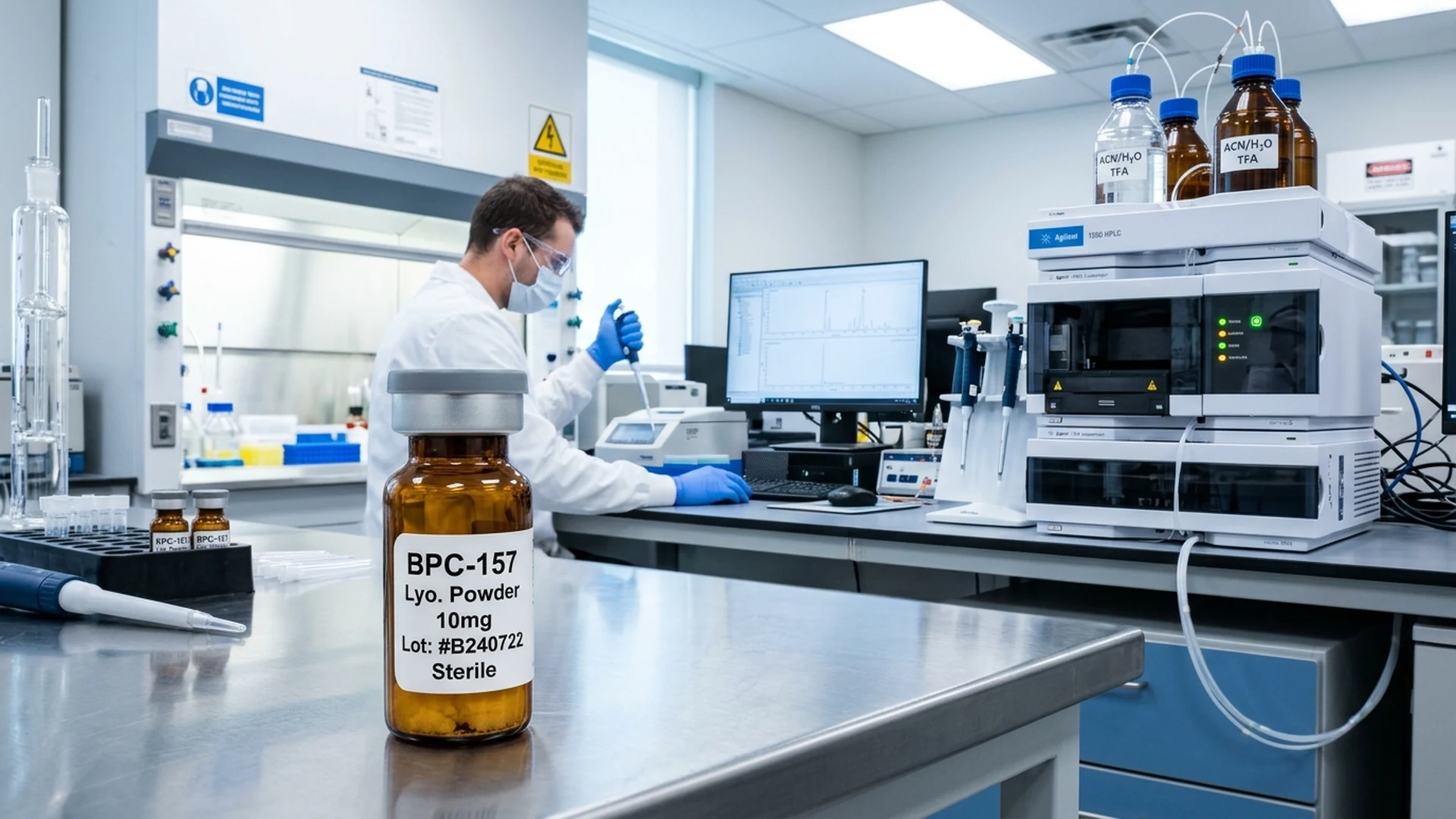
BPC-157 Lyophilized Stability Protocols in UK Laboratories
Detailed analytical protocol for BPC-157 lyophilized powder storage, bacteriostatic reconstitution, and HPLC purity degradation curves.
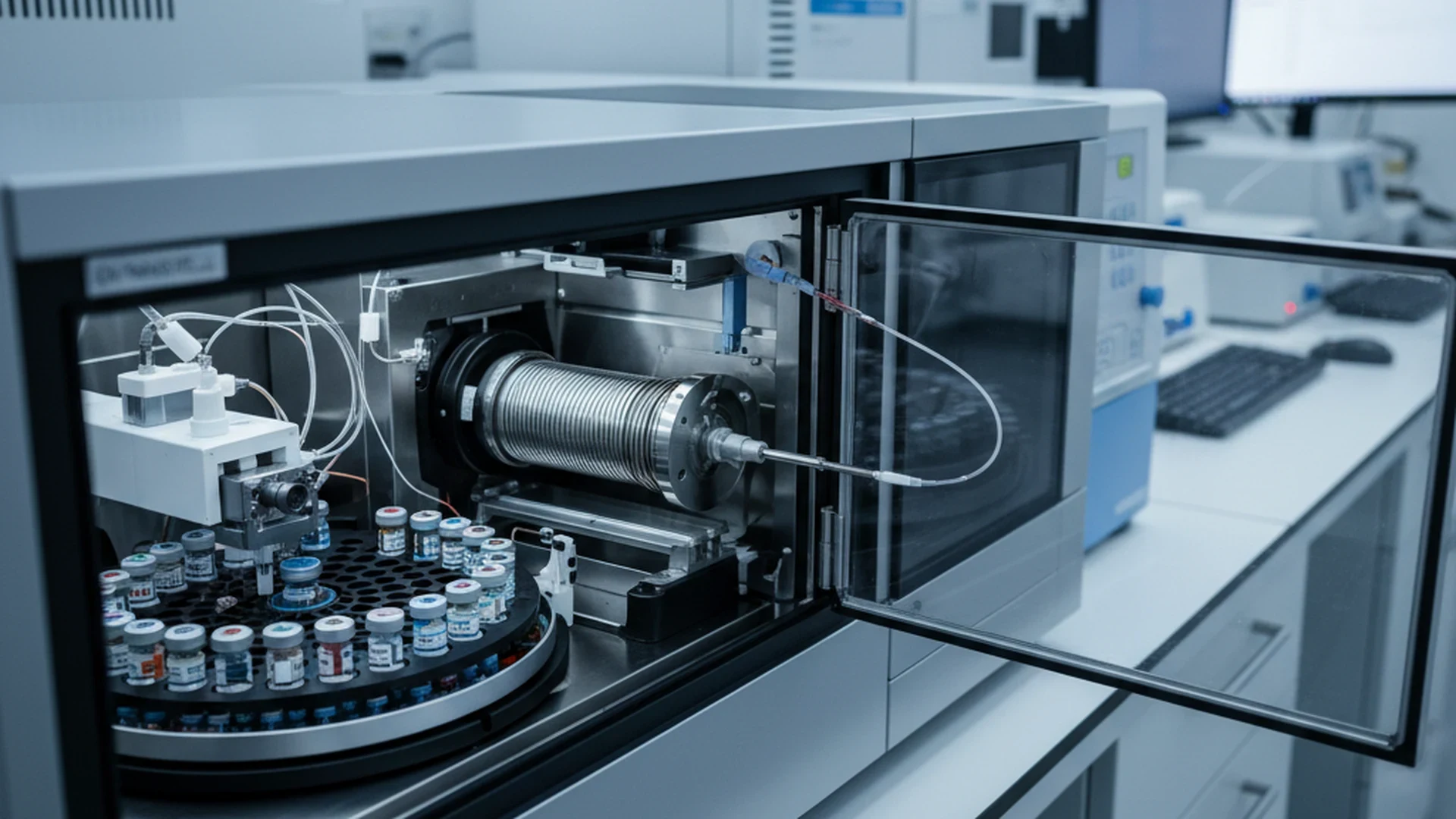
TB-500 Reconstitution & Dilution Protocols for Assays
Laboratory standards for reconstituting synthetic TB-500 hexapeptide with bacteriostatic water, measuring actin-binding affinity, and cold-chain stability.
Frequently Asked Regulatory & Chemical Questions
Statutory legal guidance under UK SI 2012/1916, analytical testing benchmarks, and laboratory reconstitution protocols.
Yes. In the United Kingdom, non-scheduled synthetic research peptides (such as BPC-157, TB-500, Semax, GHK-Cu, and Ipamorelin) are entirely lawful to purchase, import, and possess for legitimate laboratory research and in vitro scientific experimentation. They are not controlled substances under the Misuse of Drugs Act 1971. However, under Regulation 46 of the Human Medicines Regulations 2012 (SI 2012/1916), it is a criminal offence to market, sell, or supply these unlicensed substances for human therapeutic administration or self-injection without a marketing authorisation granted by the MHRA.